



The IONA® test is a non-invasive prenatal screening test to estimate the risk of a fetus having Trisomy 21, Trisomy 18 or Trisomy 13. The test can also be used to determine the sex of the fetus.

The IONA® test is an advanced prenatal screening test which is offered to pregnant women to estimate the risk that their fetus may be affected with Trisomy 21 (Down’s syndrome), Trisomy 18 (Edwards’ syndrome) or Trisomy 13 (Patau’s syndrome). The test can also be used for fetal sex determination if required.
The IONA® test is a complete CE-IVD product for laboratories wishing to offer their own in-house non–invasive prenatal testing (NIPT) service. It is suitable for use from 10 gestational weeks for singleton or twin pregnancies.
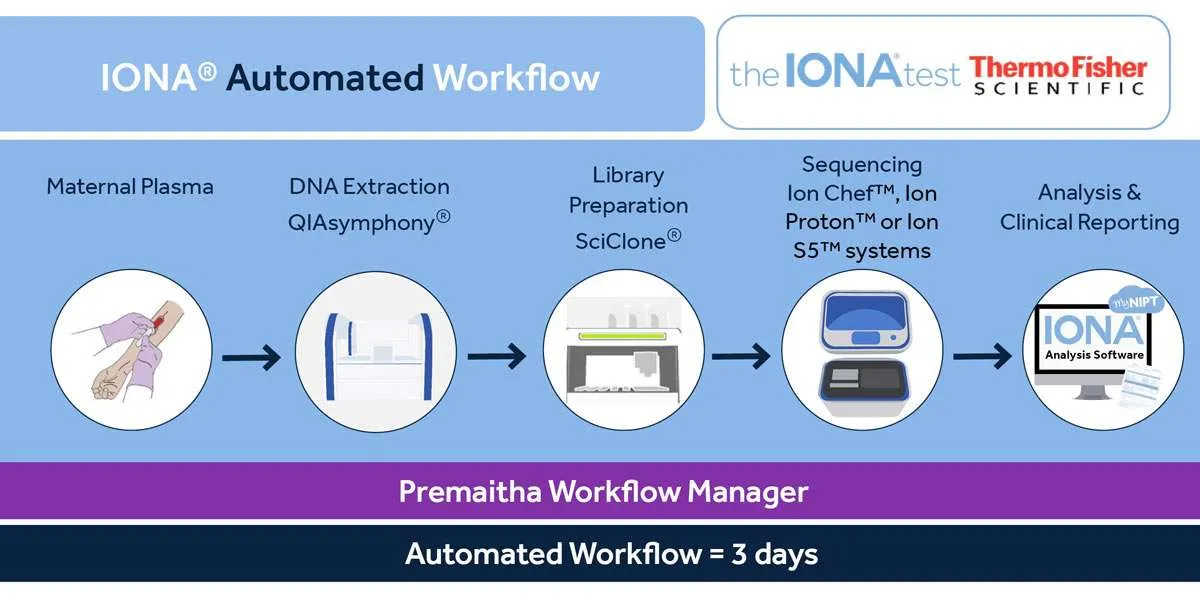
The analysis is performed on cell-free placental DNA from a maternal blood sample, using Next Generation Sequencing technology, with test results available with a turnaround time of just 3 days. By offering this service locally, laboratories can broaden their offering and provide pregnant women fast, reliable results that reduce the need for invasive tests, which reduces the associated stress and anxiety for expectant parents.

Quality Control and Fetal Fraction
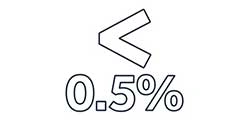
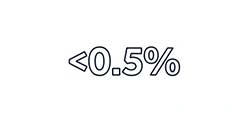
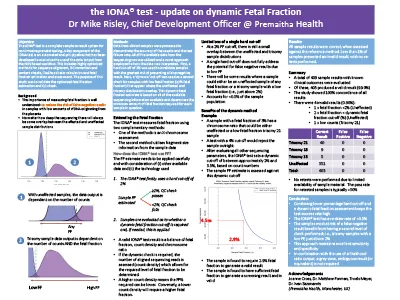
The IONA® test has been optimised to deliver the most accurate results while simultaneously keeping the number of sample failures due to low fetal fraction at a minimum. This is achieved by using a unique approach of two fetal fraction evaluations. All samples must have at least ≥2% fetal fraction. In addition, all samples at risk of a false negative or false positive result are evaluated using our proprietary dynamic fetal fraction assessment. This adapts the level of required fetal fraction for the sample to the quality of the sequencing data. Unlike other NIPT methods, the IONA® test has a very low re-draw rate of <0.5%.
Please note that the IONA® test is not available for sale in the United States
the IONA® test
The IONA® test has been validated on a highly flexible and scalable workflow, suitable for low to high volume sample throughput, enabling clinical laboratories to meet and grow with their rising demands. It is available as both an automated and manual workflow.
The IONA® test directly measures the change in the proportion of chromosome 21, 18 and 13 in maternal plasma samples using a whole genome, shotgun sequencing approach. This is achieved in just 3 days using the highly automated and validated IONA® test workflow to give the highest quality results with the lowest amount of hands-on time (HOT) possible. All steps from DNA extraction through to analysis are included, eliminating the need for lengthy validation and optimisation processes.
Yourgene offer a range of library preparation kits for the manual and automated workflows, depending on the sample throughput, to meet the needs of your laboratory. The IONA® test has been validated on sequencing platforms from Thermo Fisher Scientific: Ion Proton™, Ion S5™/Ion GeneStudio™ S5, Ion S5™ XL/Ion GeneStudio™ S5 Plus/Ion GeneStudio™ S5 Prime.
Indications detected

NIPT Analysis
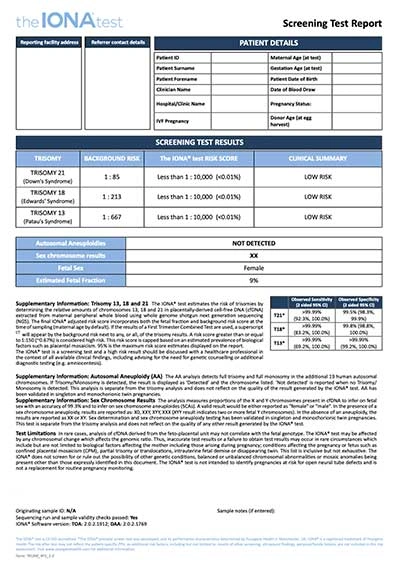
Yourgene has developed its own automated, custom, dedicated bioinformatics analysis software as part of the IONA® test clinical workflow. The IONA® software employs highly efficient, multi-core analysis algorithms. It analyses the relative amount of chromosomes 21, 18 and 13 to calculate a risk score for the presence of a trisomy. This result is then further detailed by automatically combining it with the age-related risk of the mother at the time of sampling to calculate an adjusted probability of the fetus being affected. A results report is generated individually for each patient. The IONA® Software allows secure local data analysis, it is not cloud-based, and no bioinformatics personnel are required.
Screening test results can be sent to clinics using the MyNIPT® portal, our safe and secure data exchange portal.
Sample Tracking
The Premaitha Workflow Manager is part of the IONA® automated workflow and is a custom, Laboratory Information System (LIS) for comprehensive clinical sample and patient data tracking from receipt to result. It interfaces with all instruments in the IONA® workflow, covering all stages: DNA extraction, library preparation, sequencing chip preparation, sequencing and analysis to produce the test result. This is the optimal paperless solution, minimising the need for labour-intensive manual tracking.
The clinical performance of the IONA® Test is evaluated as the proportion of patients who are diagnosed correctly as positive or negative, respectively.
| Positive predictive value (PPV) (Precision)* | Negative predictive value (NPV)* | |
|---|---|---|
|
Trisomy 21
(Down’s Syndrome) |
98.88%
|
100%
|
|
Trisomy 18
(Edwards’ Syndrome) |
97.22%
|
99.99%
|
|
Trisomy 13
(Patau’s Syndrome) |
<99.99%
|
<99.99%
|
The high IONA® PPV implies that the false positive results are minimised (unaffected fetus tested positive); meaning less unnecessary diagnostic procedures are required. The high IONA® NPV implies that the false negative results are minimised (affected fetus tested negative), meaning fewer syndromes are being missed.
Predictive values are more relevant than sensitivity and specificity for clinical decision and counselling of patients screened for Down’s, Edwards’ and Patau’s syndromes.
- Post-Market Performance Evaluation of the IONA® test in over 28,400 singleton and monochorionic pregnancies. Correct as of November 2019.
- Based on confirmed discordant results with a diagnostic test.
- PPVs and NPVs are specific to the population and varies by prevalence. PPVs vary based on the NIPT assay.
- The Sensitivity and Specificity probabilities are not equivalent to the positive predictive value (PPV).
Technical characteristics of the IONA® test
| Positive predictive value (PPV) (Precision)* | Negative predictive value (NPV)* | False Negative Rate (FNR) | False Positive Rate (FPR) | Accuracy | |
|---|---|---|---|---|---|
|
Trisomy 21
(Down’s Syndrome) |
99.84%
|
99.98%
|
<0.001%
|
0.022%
|
99.98%
|
|
Trisomy 18
(Edwards’ Syndrome) |
97.22%
|
99.99%
|
0.014%
|
0.0125%
|
99.98%
|
|
Trisomy 13
(Patau’s Syndrome) |
100%
|
100%
|
<0.001%
|
<0.001%
|
<99.99%
|
Definitions
- PPV: The likelihood that a screened positive pregnancy, is truly affected with a trisomy
- NPV: The likelihood that a screened negative pregnancy, really doesn’t have a trisomy
- Sensitivity: The proportion of truly affected pregnancies that screen positive
- Specificity: The proportion of truly unaffected pregnancies that screen negative
- FRN: The proportion of pregnancies that have the syndrome but have screened negative
- FPR: The proportion of pregnancies that do not have the syndrome but have screened positive
- Accuracy: The likelihood that a fetus will have a true screening result (true negative or true positive)

Fetal Sex Determination
If specifically requested, the IONA® test is able to identify whether the fetus is genetically male or female based on cell-free DNA extracted from the maternal plasma. The sex determination test has an accuracy evaluated at >99% for singleton and monochorionic twin pregnancies. The IONA® test is not suitable for dichorionic twin pregnancies as the fetal gender of each individual twin cannot be determined.
Discordances between phenotypic and genotypic fetal sex assessed by the IONA® cfDNA analysis may potentially arise with technical failure or very rare biological conditions (such as vanishing twin and sex chromosomal abnormalities).
A ‘Sex Determination Failure’ result may be reported if there is insufficient data to support the sex determination analysis. This is separate from the trisomy analysis and does not reflect on the quality of any other result generated by the IONA® test.
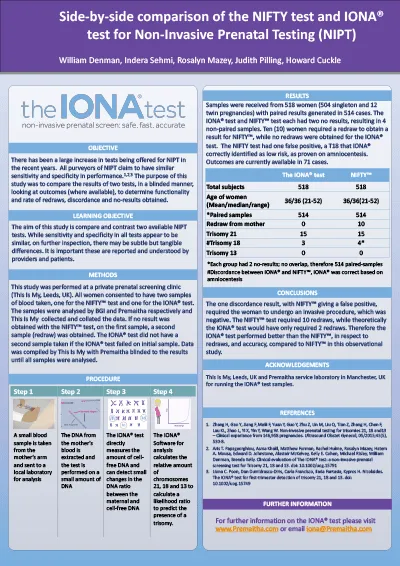
The IONA® test is a CE marked in vitro diagnostic product and as such the IONA® clinical validation study6 has formed part of the Technical File that has been reviewed by a Notified Body. An independent study5 performed at Kings College, London showed the IONA® test detected 100% of the trisomies, with 0% false positives, present in the 242 blinded maternal blood samples.

The IONA® test has a re-draw rate of <0.5%
the IONA® test publications


How can we help?
If you have a question or would like to learn more about our products and services, we're here to help.